Skip to Content

Ickrus

A better chatbot and resource library for new parents.

3

rounds of testing

33

survey respondents

44

testers

$100

yearly, suggested
Tools

Flowise
Glide
Miro

Tasks

User interviews
Product development & design
Usability studies

Timeline

Overall: 6 months
Discovery & Research: 2+ weeks
Design & testing: 10 weeks


Through interviews and analysis on how to solve for new parent anxieties, I learned about the needs parents today have in the modern digital age. Testing different strategies for a better digital solution, I interviewed parents, did three rounds of user testing, and attempted different iterations of the solution to focus on solving for the problem.

Problem

Those considering becoming parents are uncertain about what they need to become self-efficacious parents. Those who are parents of young children are overwhelmed about the present and scared about their future. There are many resources available to offer advice and information, but none are cost effective and interactive.

Outcome

I trained a chatbot with public domain resources to give succinct, direct, and trustworthy information. To create a custom chatbot in 2023, I used Flowise through Render and an OpenAI API. I also tested hosting the chatbot on an app I made for Ickrus using Glide.

Interviews

I created a screener and sourced parents who provided detailed descriptions of how current parenting resources could improve. The four parents I ended up speaking to had at least one child five years old or younger and was either working full time or had taken time off for a newborn.

During interviews, I found that parents spent hours searching for information and have solicited all mediums of advice from offline (friends, classes, doctors) to online sources (social media, classes forums). A common pain point was finding credible and relatable information. Parenting forums provided the most support around the clock, but its value lied in knowing parents weren’t alone in navigating trials. However, the feedback in response to those situations may not have been reliable or at least work in every situation.

33 responses to a user screener from parents sourced from online communities.

“Intentions are half the battle”

“I spend five hours searching for a solution online”

“You don’t always know if [answers online] are real”

Minimum Viable Product

The answer seemed to be an embeddable chatbot. To start, I used a no-code platform, Flowise which integrated OpenAI API as part of the NLP workflow.
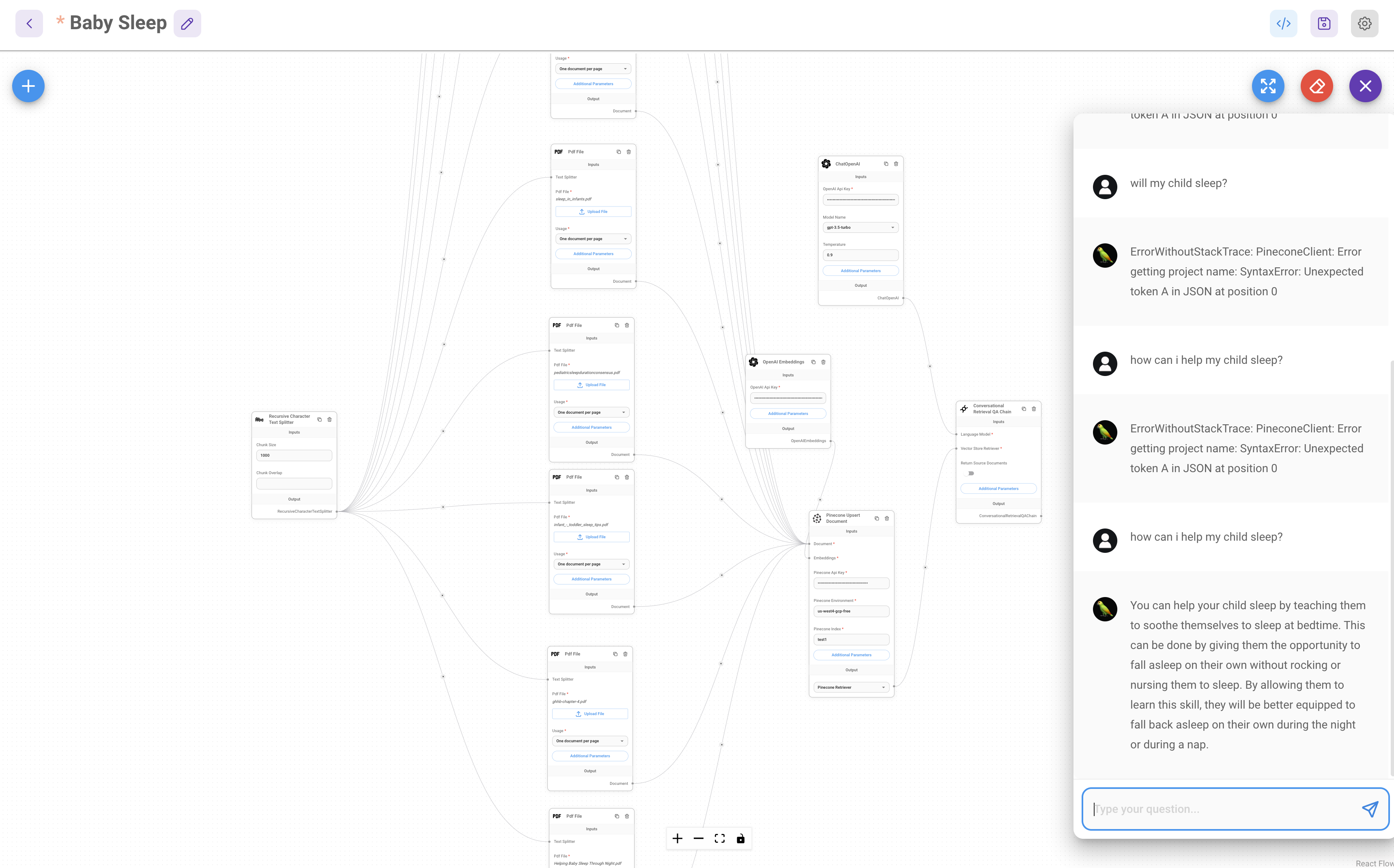
 

Linking resources with ChatGPT API and Pinecone to produce a functioning chatbot.

Usability Testing

I embedded Ickrus into two different sites. One had a plain white background (Google Sites) and the other on a light green background (on Framer). The first was used in testing to help focus on the nature of results.

Test One

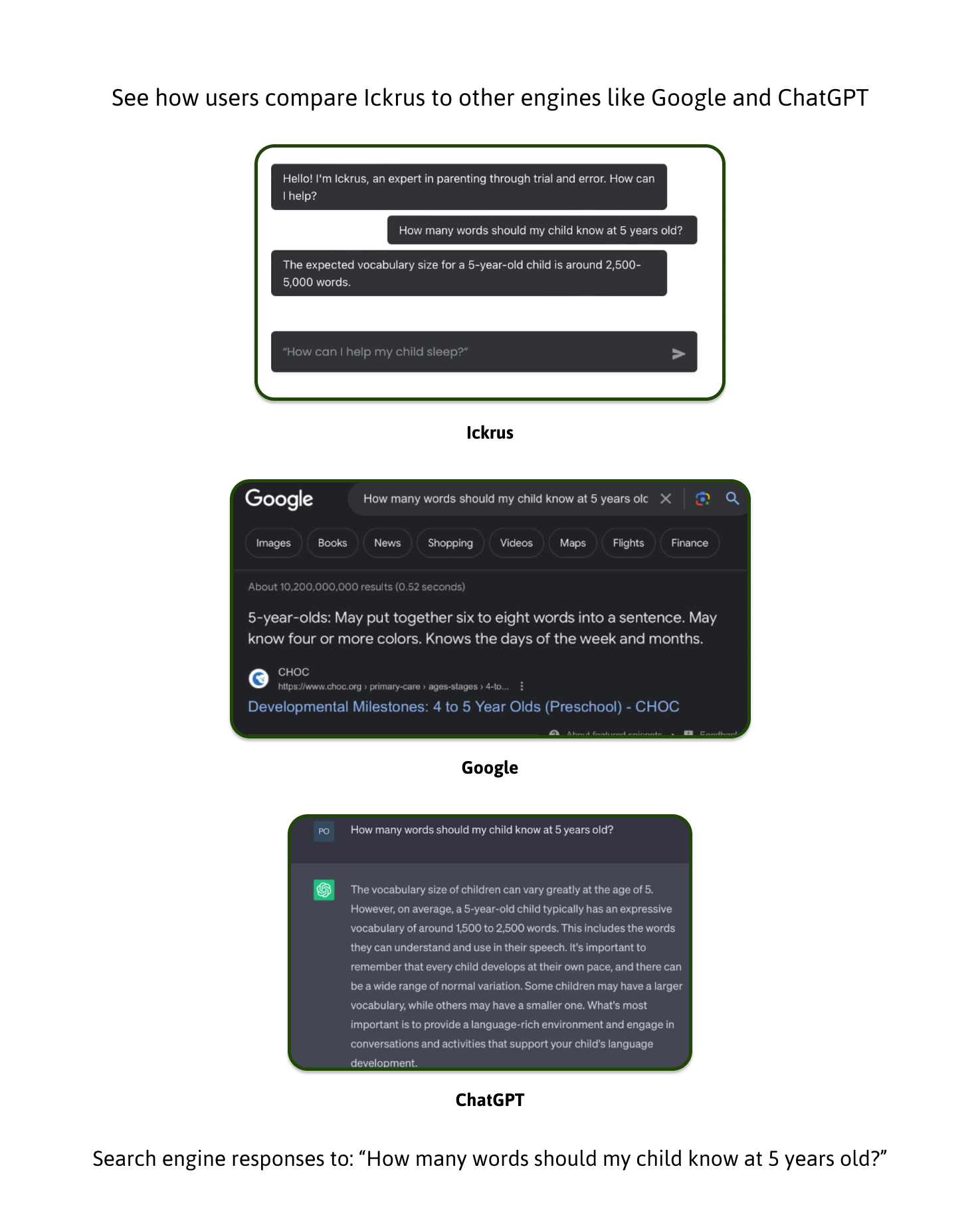
I asked ten users to type in the same parenting related question of their choice into Ickrus, Google, and ChatGPT. From the screenshots they uploaded (and from user comments), it was clear that Ickrus provided concise feedback. Some users preferred this, others thought it was a pain point. Many users thought Ickrus was desirable, but the feedback that Ickrus needed an additional component like a parenting forum, stuck to to me.
 

Test Two

The second test presented Ickrus as a single use site for a chatbot. I asked 25 users if they would use such a service, what was missing, and how much they would pay for it. Users on average said they would pay a median of $50/year.

This felt encouraging, but I couldn’t see how Ickrus fell into the habits that users currently had with using social media daily. Ickrus was a single use “search engine” of sorts, so it wasn’t as though any other curiosity brought users to Ickrus unless they remembered.

This made the idea of a parenting forum more appealing.
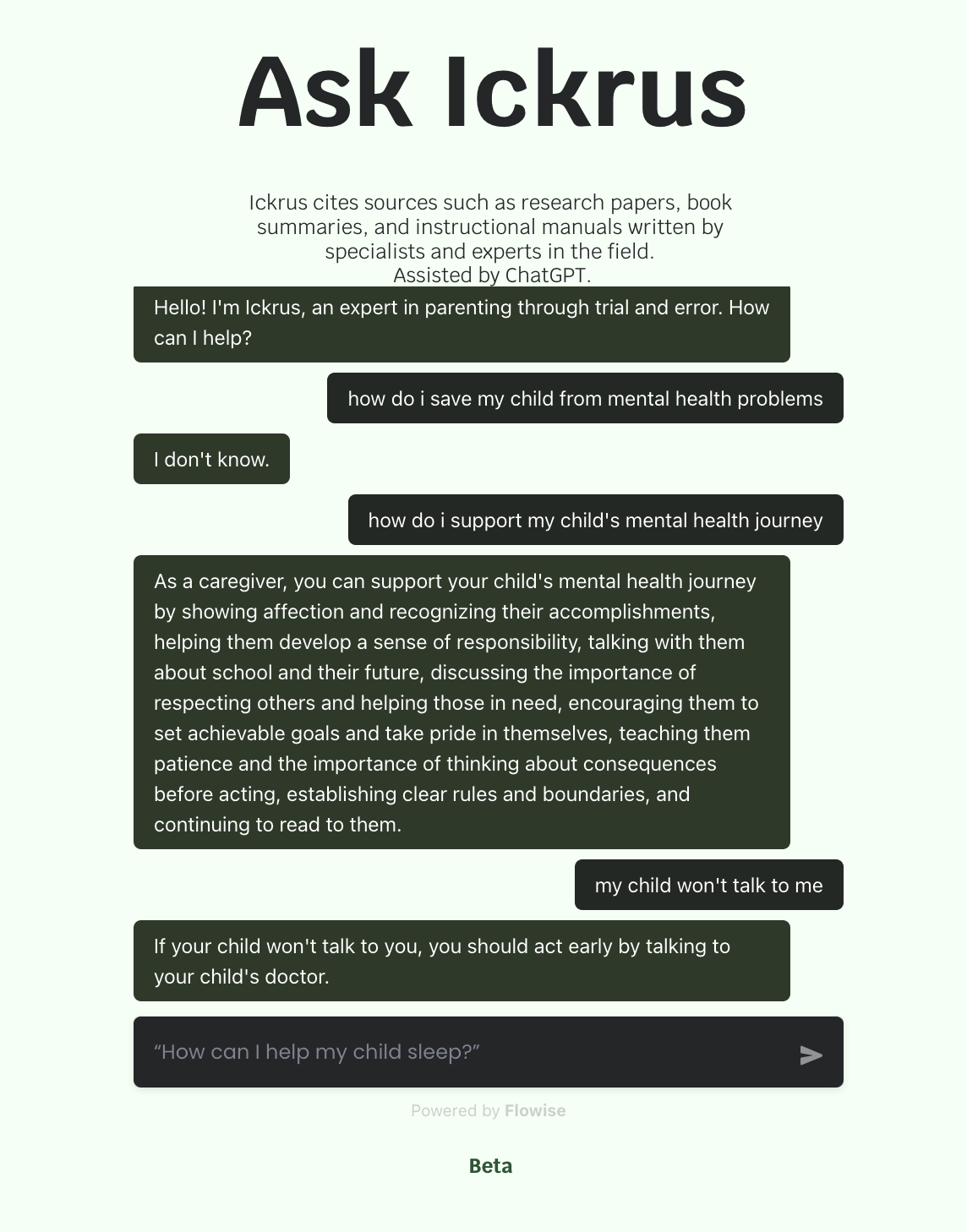
 

MVP 1.2 (Framer)

Pivoting

In searching the market, I found that the online parenting community-centered platforms were saturated and none were designed in service helping parents find a “solution.”

I referred back to my Customer Jobs deck and remembered that users solicit parenting forums to seek parents discussing identical situations to the user’s. It doesn’t happen all the time and the information that users do stumble across leads them to ideate on the particulars of their circumstance. 

In other words, parents were looking for information from forums to prompt self-reflection for their own circumstances.

I decided to make a pivot and create a platform which centers on education on important parenting topics with prompts. The education materials would help parents learn about common issues both they and their child may face. It would also include prompts to teach parents better problem solving skills.

MVP 2.0

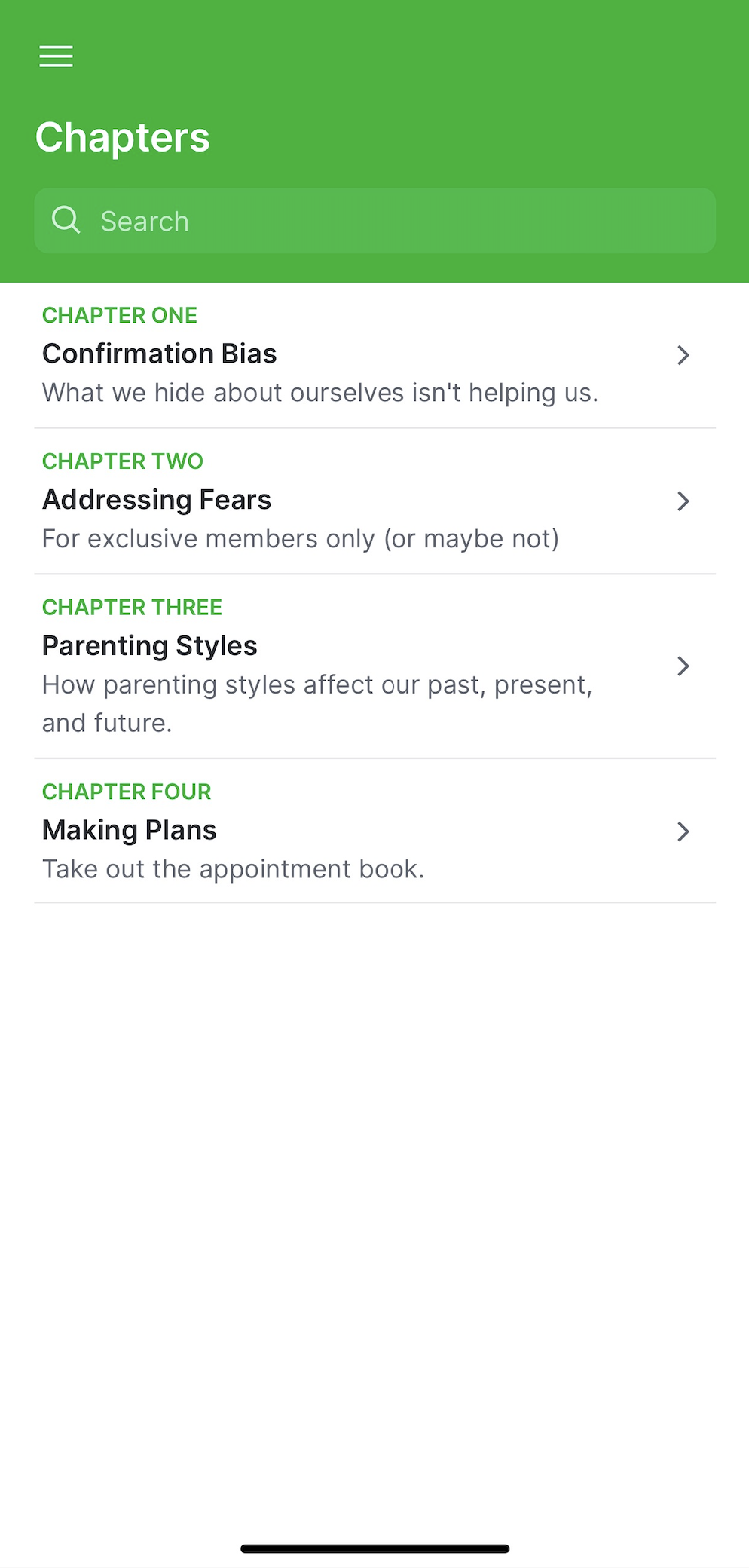
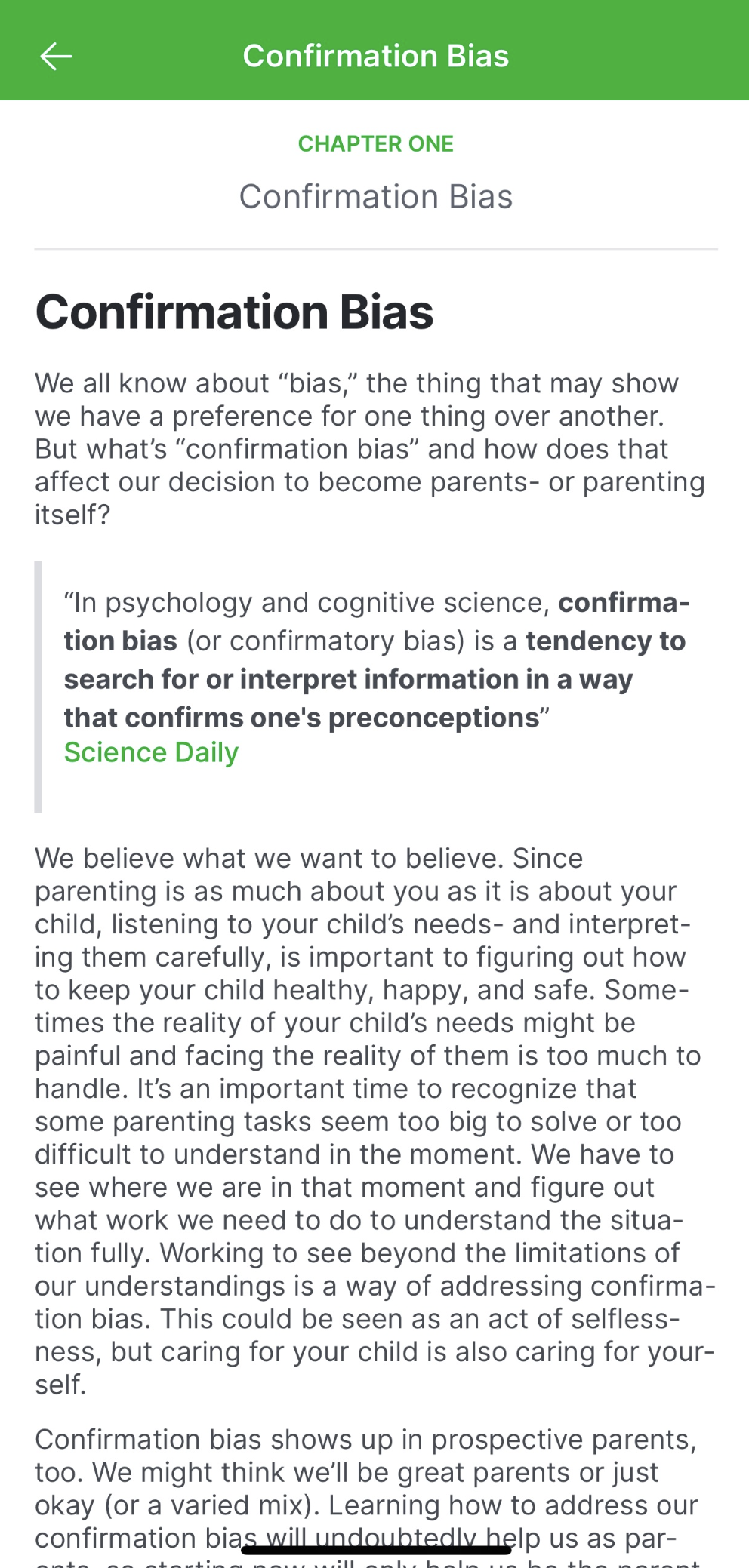
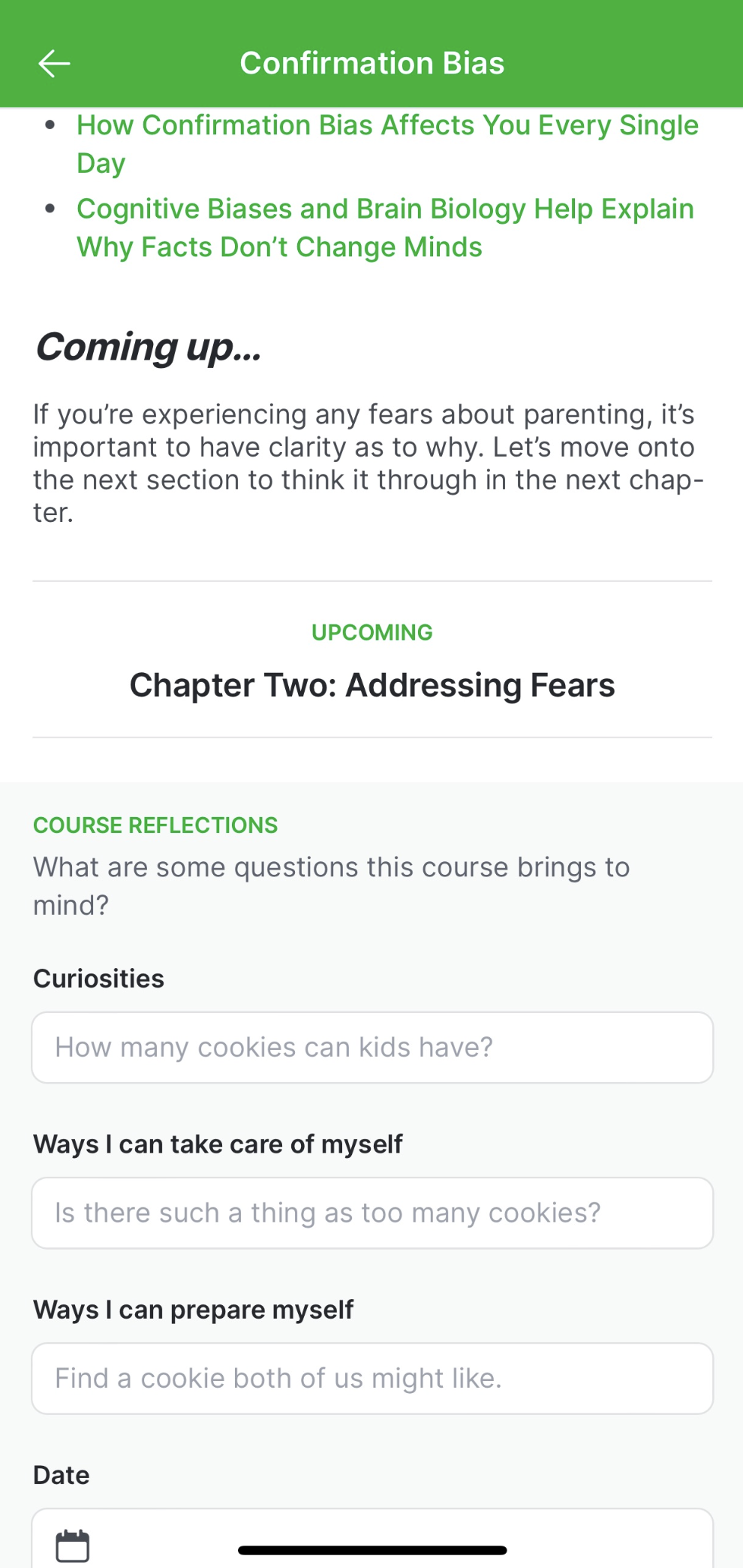
Thinking that parents are looking at community boards to prompt self reflection, I thought making an educational app would fill that void. Users reported that they would pay $100/year for the app (which included the chatbot), but also wanted a community component. The app was made in a no-code app builder called Glide.
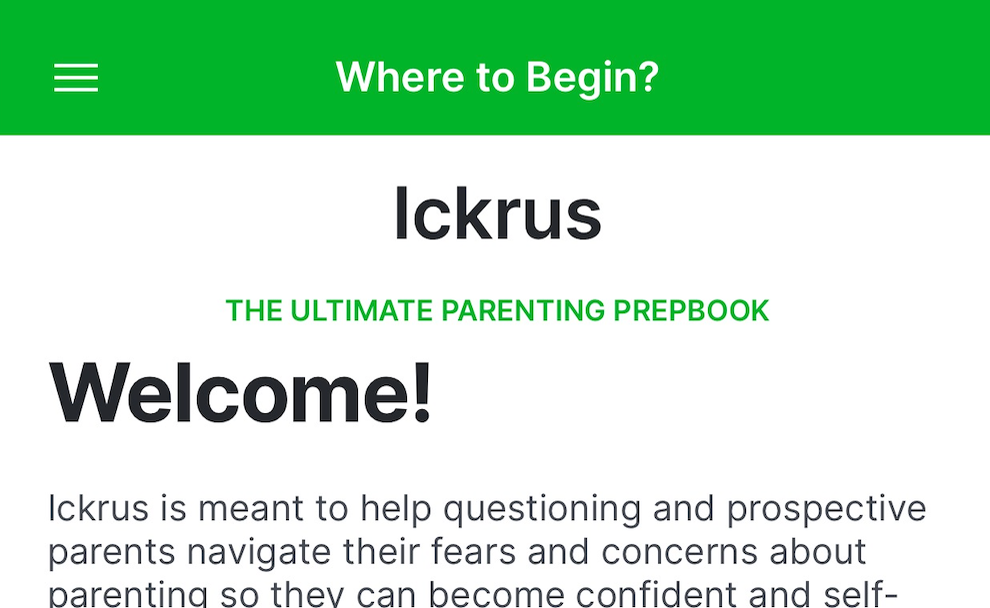
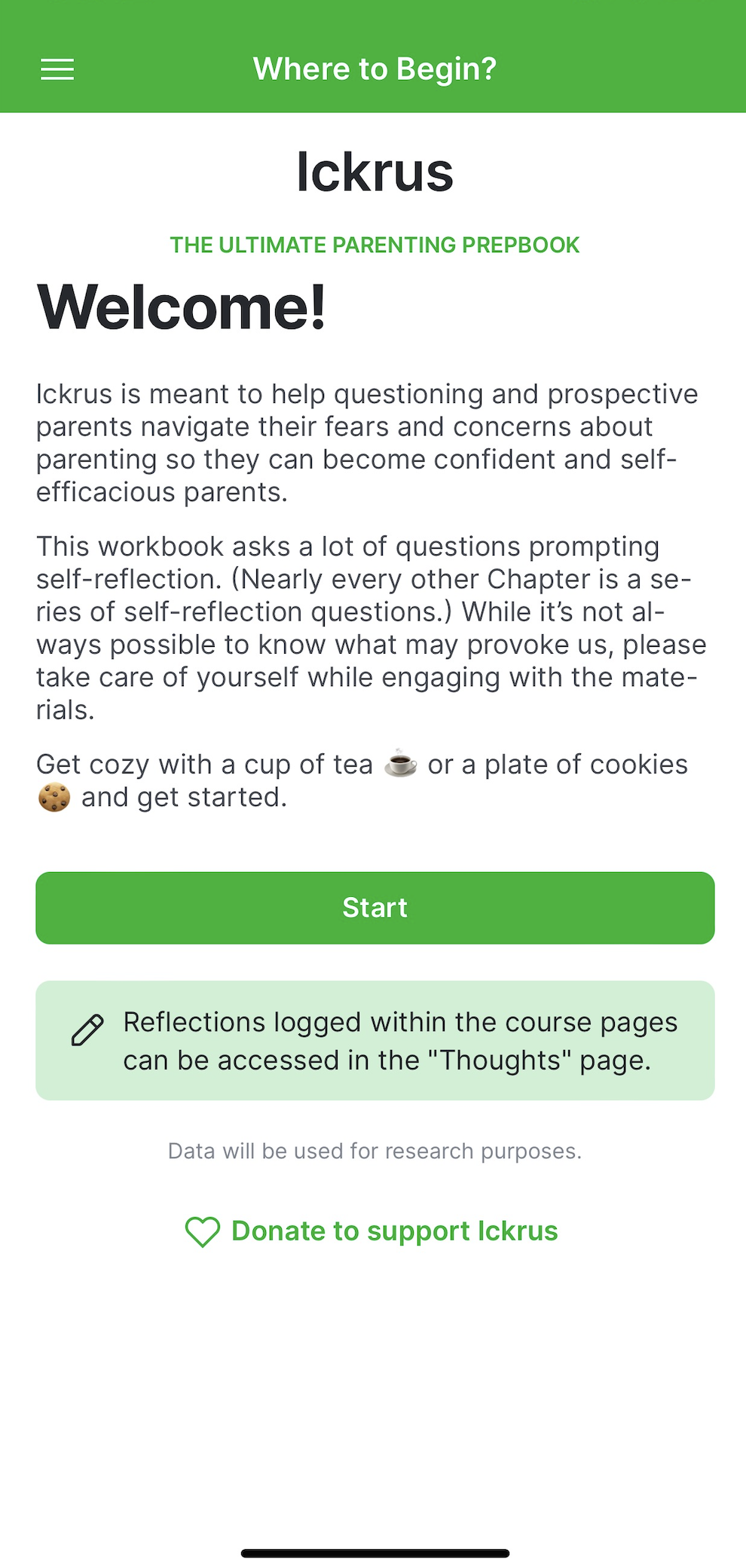


Image gallery item

Landing Page

Image gallery item

Chapters List

Image gallery item

Article Page

Image gallery item

Reflection Section

Learnings

Seeing how users wanted a community component at each stage of testing, I thought it was unlikely for users to eventually purchase pay the $100/year that they said they would pay for the app. What was a pain point was still a core experiential need, even if it did not solve the immediate practical need they expressed to me. This shows that, sometimes, not even users know what they need. But one reason I was unsure about exploring a community feature was because I knew I couldn’t code it.

Wireframes

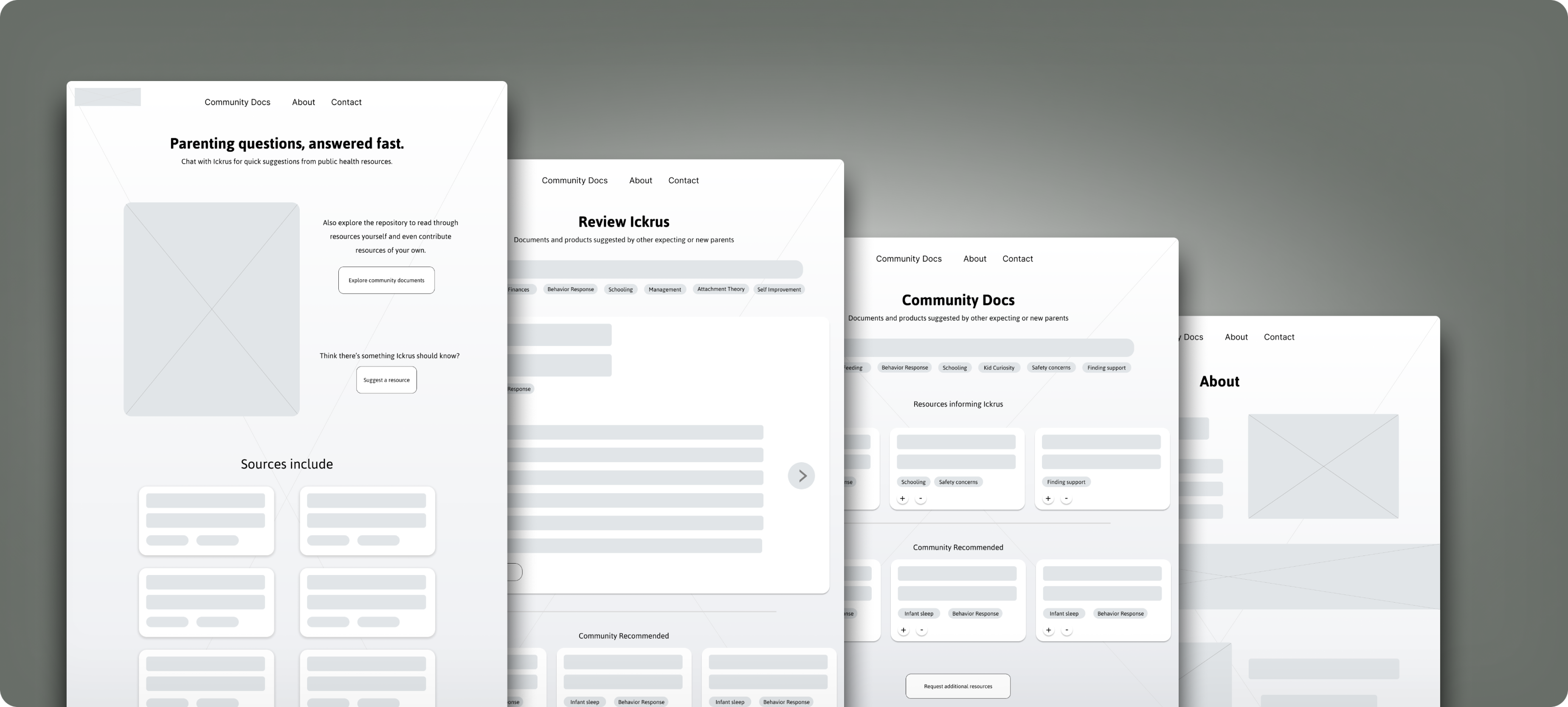
I revisited the project, adding features like rating resources which integrates some element of community validation. I’ll test the designs made in Figma to see if users resonate with this level of community involvement or if they’ll ask for more. If they do, I’ll know the project is at a stage worth building on.

 
Creating a platform that focused on users’ needs for fast and reliable information would better served as a simple resources repository.
 

A sustainable solution

The new version of Ickrus would be free and would run on affiliate links for products that users would recommend. The goal is to make a product worth $100/year, not priced as such for the fear of maintenance that would come with making an app, whether it is was bespoke coding or created using a no-code app builder


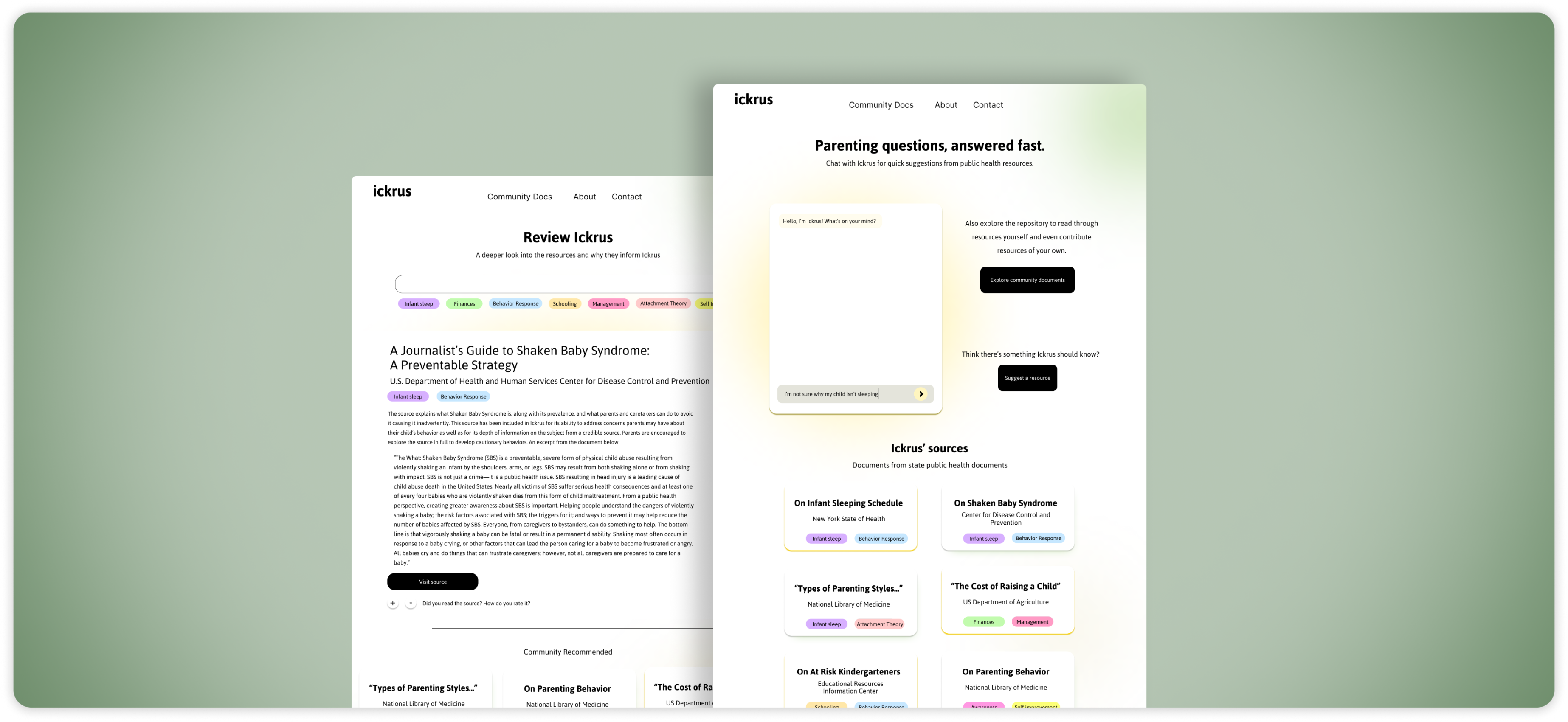
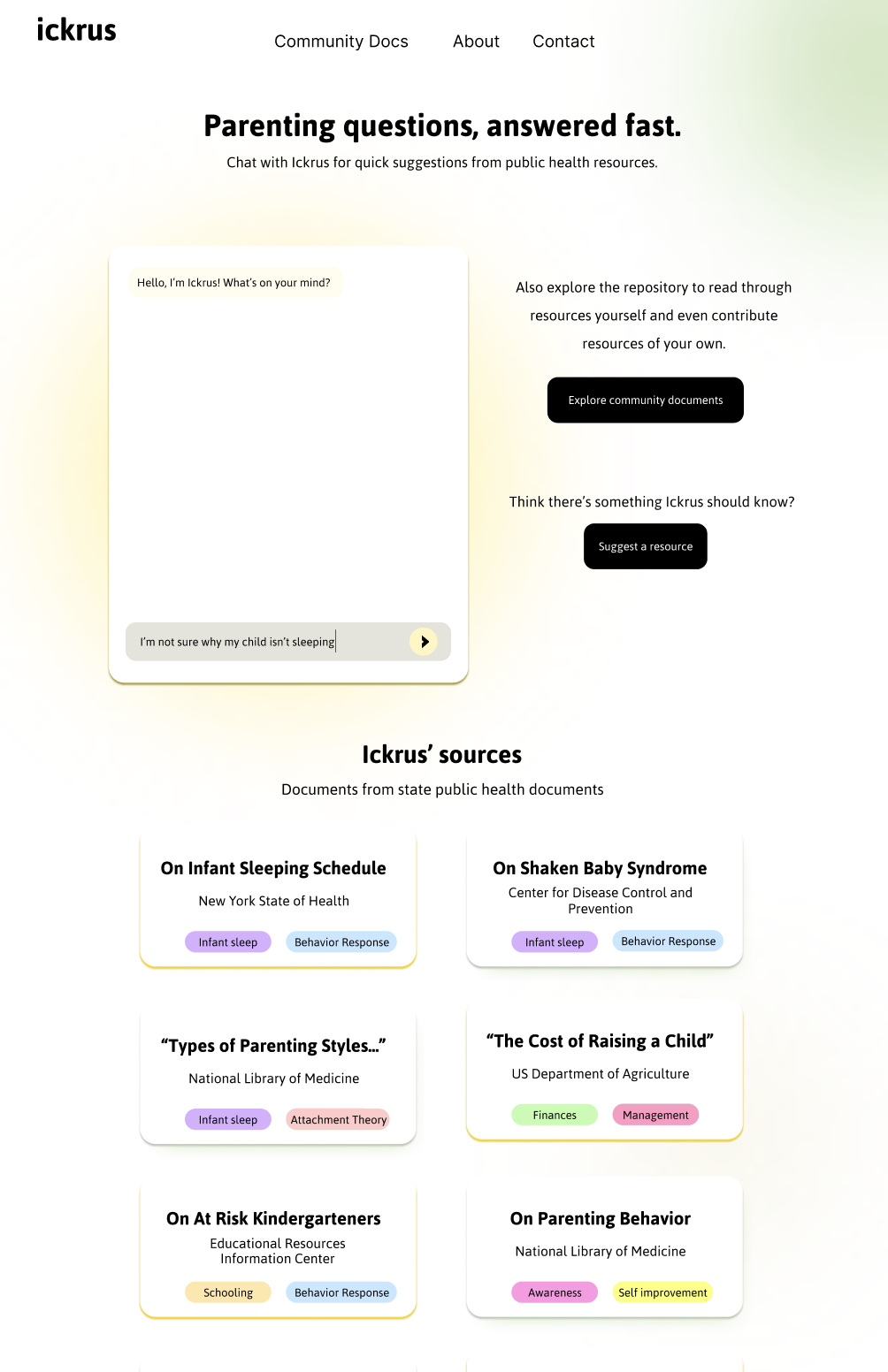
The new Ickrus landing page keeps the chatbot. Additional pages allow parents to review the sources and rate their usefulness.
Deep Dive

View the presentation below to review the case study in depth.